Architectural Styles in Wilmette and How They Influence Home Choices
July 9, 2026
July 9, 2026
Choosing a home in Wilmette is rarely just about square footage or bedroom count. In this village, architectural style often shapes how a home looks, feels, and functions every day. If you are trying to decide between a classic Colonial, a character-filled Victorian, a compact Cape Cod, or newer construction, understanding those differences can help you make a smarter choice. Let’s dive in.
Wilmette has a long and layered housing history, which is why the village does not read like a one-style community. Village history notes that east Wilmette developed on a wooded tract near Lake Michigan, while Gross Point to the west began as a farming community. By the 1920s, east Wilmette had many large residences designed by local architects, while more modest homes extended west toward Ridge Road.
That history still shows up in the homes you tour today. The Wilmette Historical Society says the village had more than 2,000 residences 100 years ago, and most of those homes are still part of the community. For you as a buyer, that means many homes come with a distinct architectural identity, older lot patterns, mature trees, and original design features that newer suburbs may not have.
Wilmette also treats historic character as part of its identity. The Village highlights single-family homes, brick-paved streets, tree-lined streets, period street lights, and proximity to Lake Michigan as part of what makes Wilmette feel unique. It also has 38 local landmarks and three National Register historic districts, which adds another layer to how buyers should think about style and ownership.
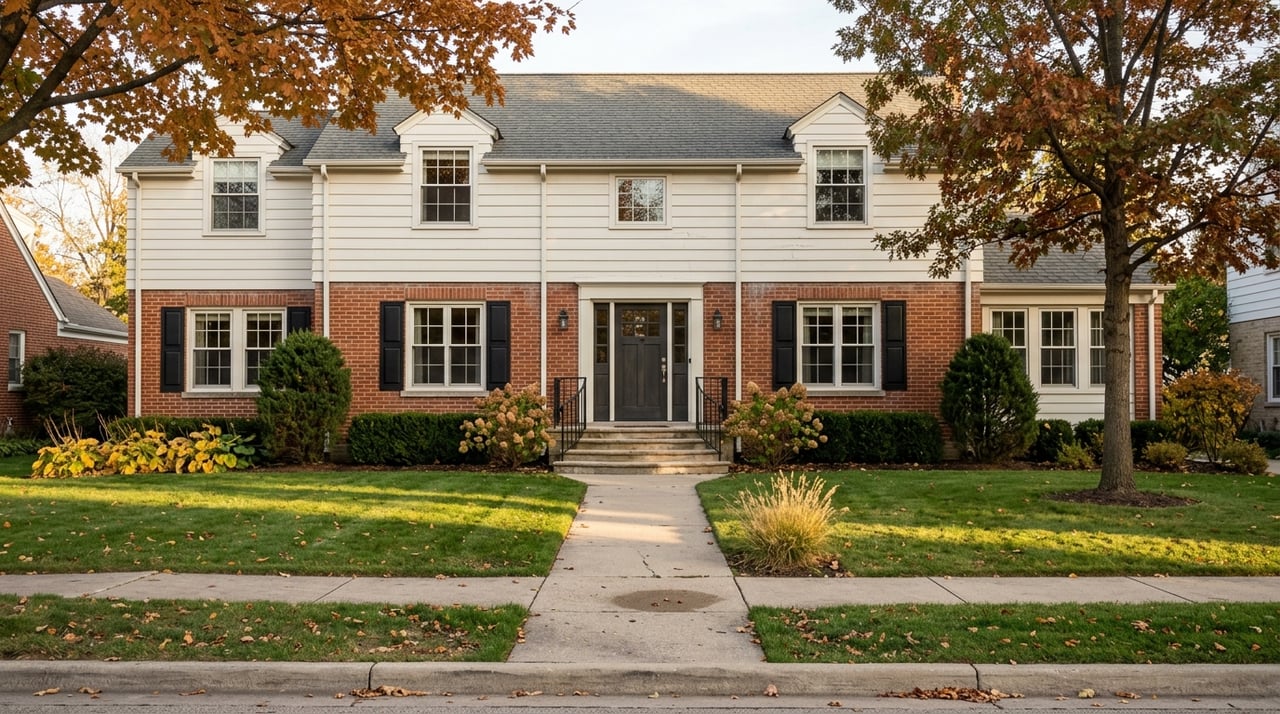
Colonial Revival homes are one of the most recognizable traditional styles you will see in Wilmette. This style draws from earlier American Federal and Georgian design, often with symmetry, a prominent front entrance, columns or pilasters, and a balanced overall appearance. In simple terms, these homes usually feel orderly, formal, and timeless.
For many buyers, the appeal is easy to understand. A Colonial-style home often offers strong curb appeal and a front-door-centered layout that feels familiar. If you like defined spaces rather than a highly open layout, this style may feel especially comfortable.
Local Wilmette materials support how naturally this style fits the village. The Indian Hill area includes Colonial Revival examples alongside other revival-era homes, showing that this is not a random style choice in Wilmette. It is part of the community’s long-established architectural fabric.
If you are drawn to classic design, a Colonial may check a lot of boxes. The layout often feels balanced from room to room, and the exterior tends to project a polished, traditional look. Many buyers appreciate that sense of structure because it can make a home feel grounded and easy to understand.
At the same time, every house is still shaped by its specific lot and updates over time. A Colonial on one Wilmette block may have a very different garage setup, yard depth, or room flow than another. That is why it helps to look beyond the symmetrical front façade and think about how the home supports your day-to-day routine.
If Colonial homes feel balanced and formal, Victorian and Queen Anne homes usually feel more expressive. Wilmette has a strong late-Victorian presence, including local examples with wrap-around porches and preserved period details. These homes often stand out right away because they break from strict symmetry and bring more visual movement to the street.
According to National Park Service guidance on Queen Anne architecture, these homes are typically asymmetrical and organized around a central staircase, with rooms flowing into one another. They may also include wrap-around porches, decorative shingles, stained glass, and spindlework. For you, that usually translates into a home with more personality and more exterior detail.
That porch-centered design can also shape how you live in the house. In a village where tree-lined streets and front-yard character matter, porches can feel like an extension of everyday living. They create a stronger connection to the block and the streetscape around you.
Victorian homes often appeal to buyers who want charm that is hard to replicate. Details like stained glass, original porches, and more varied room shapes can make these homes feel memorable from the moment you walk in. If you value character over strict simplicity, this style may speak to you.
They can also come with more complexity. Because these homes often have more ornament and surface detail, you may have more exterior elements to maintain over time. That does not make them less appealing, but it does mean style and upkeep often go hand in hand.
Cape Cod homes usually attract buyers who want something more compact and straightforward. This house type is often smaller in scale, commonly one-and-one-half stories, with simple proportions and efficient interior planning. Compared with larger revival homes, Cape Cods often feel more manageable and less formal.
Wilmette’s Indian Hill materials show local Cape Cod influence as well, including at least one house derived from a traditional Cape Cod design. That matters because it shows the style is part of Wilmette’s architectural mix, not just a later addition from outside the area.
For many buyers, the appeal is practical. A Cape Cod often offers classic curb appeal without the size or complexity of a larger historic house. If you want a home that feels approachable and efficient, this style can be a strong fit.
Cape Cod homes often spark long-term renovation ideas. Because the footprint is usually compact, buyers may think about dormers, rear additions, or finishing upper-level space over time. In Wilmette, that matters because the village’s review rules specifically discuss projects like additions and dormers.
This does not mean every Cape Cod needs work. It simply means these homes often offer a clear path for buyers who want to grow into a property rather than buy maximum size on day one. For some households, that flexibility is a major advantage.
Newer homes in Wilmette are best understood as part of the village’s ongoing evolution. Village history notes that since the mid-1990s, Wilmette has seen teardowns, additions, and newer, larger structures. In a mature suburb with limited vacant land, that usually means newer construction is infill or replacement housing rather than large-scale subdivision development.
For buyers, newer construction is often less about a named architectural style and more about how the home lives. These homes may offer larger room sizes, updated systems, and layouts that feel less constrained by older floor plans. If function and modern flow are high priorities for you, newer construction can be appealing.
At the same time, Wilmette’s local preservation guidance emphasizes compatibility in historic settings. New construction is not required to copy one historic style exactly, but it is expected to relate to its surroundings. That means the best newer homes in Wilmette often work with the block rather than ignoring it.
In Wilmette, the lot can matter almost as much as the house style. The Village points to tree-lined streets, brick-paved streets, period lights, and Lake Michigan proximity as part of the village’s character. Historic accounts also note tree-lined parkways in the east and winding roads in Indian Hill Estates.
That setting shapes how homes feel from the outside in. Porches, front yards, and landscaping are not just extras here. They are part of how the architecture connects to the street and to daily life.
Wilmette’s development history also means lot conditions can vary significantly by block. East Wilmette historically developed with larger residences, while west Wilmette included more modest homes. So even if you are comparing two houses with similar architecture, you may find major differences in backyard size, driveway width, garage placement, or how usable the outdoor space feels.
When you tour homes, it helps to think past first impressions. Ask yourself how the lot supports the way you actually live, whether that means outdoor dining, gardening, storage, or room to move around comfortably. In Wilmette, style and site are closely connected.
A beautiful front elevation can draw you in, but the block context often determines long-term satisfaction. The same architectural style can feel very different depending on yard layout, setbacks, and garage access. That is one reason local guidance matters so much in this market.
If you are buying an older home in Wilmette, renovation rules deserve attention early in the process. If a property is a Wilmette Local Landmark, exterior work generally requires a Certificate of Appropriateness before a building permit can be issued. The Village also states there is no fee to apply.
The Historic Preservation Commission reviews additions, alterations, exterior repairs, removals, and relocations of local landmarks. For you, the key point is simple: a house may look like a standard older home, but if it has local landmark status, exterior changes are reviewed before work begins.
Wilmette’s review standard is compatibility, not imitation. According to the Historic Preservation Commission handbook, review looks at factors like height, façade proportion, openings, porches, materials, textures, roof shapes, scale, and directional expression. New construction and additions do not have to copy one single historic style, but they do need to relate visually to the house and the street.
Even outside local landmark designation, many common projects can trigger local review. Wilmette’s zoning handbook discusses additions, dormers, front porches and decks, detached garages, driveway and impervious-surface changes, HVAC equipment, and heritage-tree-related work. For buyers, this means it is wise to think about your renovation goals before you fall in love with a house that may have more constraints than expected.
In Wilmette, architectural style is not just a design preference. It is often a shortcut to how the house functions, how the lot works, and what ownership may involve over time. Colonial homes often signal tradition and balance, Victorian homes highlight character and ornament, Cape Cods offer compact efficiency, and newer construction leans toward modern function and size.
The best choice depends on what matters most to you. If you want a home with strong historic identity, you may be willing to take on more upkeep or renovation review. If you want easier day-to-day function and more updated systems, newer construction or a thoughtfully updated older home may be the better fit.
The smartest approach is to compare style, block, lot, and future plans together rather than treating them as separate decisions. In a village as layered as Wilmette, that fuller view often leads to better choices and fewer surprises.
If you are weighing home styles in Wilmette and want practical, neighborhood-specific guidance, the team at Leigh Marcus can help you evaluate what fits your goals, your lifestyle, and the local market.
2203 W Roscoe St Chicago, IL 60618 30 Green Bay Road Winnetka, IL 60093