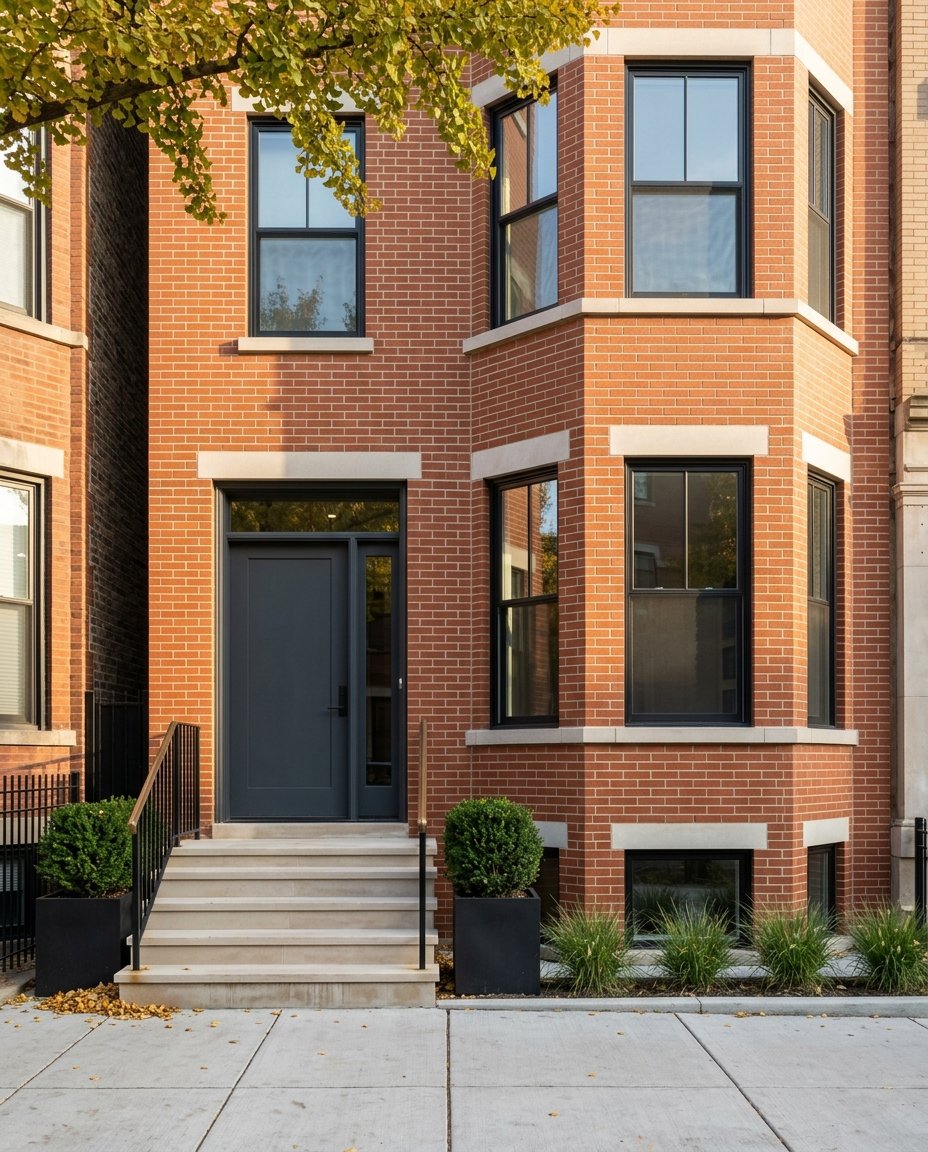
Buying a New-Construction Three-Flat in West Town
May 7, 2026
May 7, 2026
Wondering whether a new-construction three-flat in West Town is a smart move? You are not alone. This type of property sits at the crossroads of city living, newer construction, and income potential, which makes it especially appealing if you want flexibility in how you live or invest. In this guide, you will learn how new-construction three-flats in West Town typically work, what to review before you buy, and which questions can help you avoid costly surprises. Let’s dive in.
West Town has the kind of housing mix that makes a three-flat especially relevant. CMAP’s 2019 to 2023 snapshot shows that 32.0% of housing units are in 3- to 4-unit buildings, while 42.2% of homes were built before 1940 and 11.8% were built in 2010 or later. That combination helps explain why buyers here often compare newer boutique buildings against older Chicago housing stock.
The area also supports both owner-occupants and buyers looking at income potential. Occupied housing in West Town is 41.3% owner-occupied and 58.7% renter-occupied, according to CMAP. In practical terms, that means a new three-flat can appeal if you want to live in one unit, buy a condo in a small building, or evaluate the property through both lifestyle and long-term value.
Pricing helps frame the decision too. Recent market snapshots place West Town around the mid-$600,000s, with Redfin reporting a March 2026 median sale price of $665,000 and Realtor.com reporting a median list price of $674,900, 26 median days on market, and a 101% sale-to-list ratio. For buyers, that points to a market where planning and due diligence matter.
Transit access adds another layer of convenience. West Town is served by the Blue, Green, and Pink CTA lines, along with the Metra Electric line at Western Avenue Station. If access and mobility matter to you, that is part of the neighborhood’s appeal.
In Chicago, the two-flat and three-flat are part of the city’s classic housing story. The Chicago Architecture Center identifies them as a defining local building form, and today’s new-construction version in West Town often looks a little different from the traditional model. Instead of a purely vintage setup, you will often see boutique 3-unit condo buildings with contemporary layouts and higher-end finishes.
Many current listings feature a mix of 2- and 3-bedroom homes, along with duplex-up or duplex-down floor plans. Garage parking and private outdoor space are also common selling points. Depending on the building, finishes may include quartz counters, Thermador appliances, flat-panel cabinetry, white oak floors, custom closets, motorized shades, smart entry systems, and roof decks.
That creates a clear tradeoff compared with a vintage walk-up or single-family home. You may gain newer systems, modern finishes, and less immediate repair uncertainty, but you may have less yard space and more shared ownership through common elements. For many buyers, the right fit depends on whether you value lower-maintenance living, income options, or greater privacy and control.
Not every new-construction three-flat works the same way. Some are sold as condoized buildings, which means each unit is individually owned and certain parts of the property are shared. If you are buying one unit in a three-unit building, the condo documents become one of the most important parts of your review.
Under Illinois law, the initial-sale disclosure packet for a condoized property must include the declaration, bylaws, a projected operating budget, and a floor plan. On resale, the seller must make available the declaration, bylaws, other condo instruments, rules and regulations, and a statement of liens and unpaid assessments. These documents help you understand what you own, what is shared, and what your financial obligations may be.
Illinois law also defines a unit as the independent part of the property and common elements as everything else. That distinction matters because roofs, exterior walls, stairs, and shared outdoor areas may fall under common-element ownership. If you are not clear on where the unit boundaries end and the common elements begin, it is harder to know who pays when repairs come up.
Small associations can feel simple at first, but they can also become expensive quickly if reserves are thin. Illinois law requires budgets to provide reasonable reserves for capital expenditures and deferred maintenance, and it requires associations to obtain adequate and appropriate insurance. Even so, in a three-unit building, a roof issue or major exterior repair can still create a special assessment if the budget is tight.
That is why it is important to review more than just the monthly assessment amount. You also want to understand the projected budget, reserve planning, and insurance setup. A low monthly payment can look attractive, but it does not always mean the building is financially prepared.
With new construction, buyers often assume that new means complete. In practice, that is not always the case. A polished finish package does not replace a careful review of the building’s legal and operational status.
In Chicago, zoning is parcel-specific. The city’s interactive zoning and land-use map makes that clear, which means you should not assume a nearby three-flat could be built the same way on a different lot. If your purchase decision depends on understanding what was allowed on the site or whether a similar project can be replicated nearby, verify the exact parcel.
Chicago’s code says a building may not be used or occupied before a certificate of occupancy is issued. The city’s certificate of occupancy process requires a completion date and inspection scheduling, and the certificate cannot be issued if installation is incomplete or deficiencies are noted. This is one of the most important checkpoints for a new-construction purchase.
You should ask to see the certificate of occupancy and understand whether final approvals have been completed. If a unit is being marketed before every step is truly wrapped up, you want that clarified before you close.
Chicago’s permit and inspection records can be useful, but the city also warns that those records are informational only. They do not prove the work was done correctly or confirm that the property is currently code-compliant. That means buyers should treat permit history as a starting point, not a final answer.
Inspection request forms can include rough, final, and new-construction inspections. If you are buying a new three-flat or a unit within one, ask whether there are any open items, incomplete work, or unresolved violations. This is a key step in separating a finished project from one that simply looks finished.
Property taxes are one of the biggest areas where new-construction buyers can be caught off guard. During construction, the property’s tax picture may reflect land value or a partially improved structure. After the building becomes fit for occupancy, that can change materially.
According to the Cook County Assessor, the owner on January 1 is liable for increased taxes resulting from new construction from the occupancy-permit date or the date the improvement is fit for occupancy. The new-construction reporting form must be filed within 30 days. For a buyer, the key takeaway is simple: the tax bill after completion may be very different from the tax history you first see.
If you are budgeting based on early tax numbers, make sure you account for the possibility of a higher assessed value once the improvements are fully recognized. This is especially important in a newer or newly completed three-flat where the finished product is a major jump from the prior taxable condition.
A builder warranty can be valuable, but you should not assume all coverage works the same way. FTC guidance notes that builder warranties generally come with new construction and often cover workmanship and materials for one year, HVAC, plumbing, and electrical systems for two years, and in some cases major structural defects for up to 10 years. Those timeframes can be helpful, but they still need to be verified in the actual contract.
The FTC also distinguishes builder warranties from home warranties or service contracts. That difference matters because buyers sometimes assume they are getting broader protection than the contract actually provides. Coverage periods, exclusions, and claims procedures can vary.
Many new-home warranties also use mediation or arbitration. Before you close, review the claim process, deadlines, and documentation requirements. A warranty only helps if you understand how to use it.
One reason buyers are drawn to a three-flat is flexibility. Depending on the structure of the purchase and your lender’s rules, you may be able to live in one unit and use rent from the others as part of the financial picture. That can make a new-construction three-flat feel like both a home and an income property.
Fannie Mae distinguishes principal residence properties from investment properties and includes specific rental-income guidance for 2- to 4-unit principal residences. It also states that monthly rental amounts must be listed separately for each unit in a two- to four-unit property. In practical terms, that means owner-occupant and non-owner-occupant purchases are not underwritten the same way.
If you plan to occupy one unit, ask early how your lender will evaluate rental income from the others. If you plan to hold the property strictly as an investment, expect a different underwriting framework. The sooner you match your financing strategy to your intended use, the fewer surprises you will face later.
A new-construction three-flat can be a strong purchase in West Town, but only if the details line up. Before you move forward, focus on a short list of practical questions.
These questions can help you separate a well-structured purchase from one that looks appealing on the surface but carries avoidable risk.
A new-construction three-flat in West Town stands out because it combines several buyer priorities at once. You get a housing format that fits the neighborhood’s building pattern, newer finishes and systems, and in some cases a path to offset ownership costs through rental income. That is a compelling mix in an area with a large share of 3- to 4-unit housing and a substantial renter base.
At the same time, this is not a purchase to approach casually. Documentation gaps, occupancy issues, reserve shortfalls, and warranty misunderstandings can all change the financial outcome. The best approach is a disciplined one that balances neighborhood opportunity with detailed review.
If you are weighing a new-construction three-flat in West Town, the right guidance can help you compare the numbers, evaluate the documents, and move forward with confidence. When you are ready to talk through your options, connect with Leigh Marcus for tailored, data-driven guidance.

2203 W Roscoe St Chicago, IL 60618 30 Green Bay Road Winnetka, IL 60093