Loft, Greystone, or New Build? Logan Square Home Styles Explained
June 11, 2026
June 11, 2026
Trying to choose between a loft, greystone, bungalow, or new build in Logan Square? You are not alone. This neighborhood gives buyers more architectural variety than many parts of Chicago, which makes the search exciting but also a little harder to decode. If you want to understand how these home styles differ in layout, upkeep, and likely price position, this guide will help you compare your options and move forward with more confidence. Let’s dive in.
Logan Square’s housing mix helps explain why buyers here often compare very different kinds of homes. In 2024, 39.2% of units were in 2 to 4 unit buildings, 29.6% were in 5+ unit buildings, 17.4% were condominiums, and 13.8% were single-family homes. In other words, this is a neighborhood where attached homes, vintage flats, loft-style spaces, and newer infill all play a major role.
The architecture also tells an important story. Logan Square was annexed in 1889, and its boulevards developed with brick and limestone homes, apartment buildings, and greystone-fronted houses and flats. Today, that history sits alongside newer residential infill, which means your options can range from classic Chicago masonry to modern turn-key construction.
That variety matters even more in a competitive market. Spring 2026 snapshots from major portals show Logan Square with sale and list prices generally in the mid-$600,000s to upper-$600,000s, with homes often moving in about 35 days and some selling above asking. The exact number varies by source, but the takeaway is consistent: buyers need to understand what they are paying for.
Greystones and two- or three-flats are part of the architectural identity many buyers picture when they think about Logan Square. These homes often have brick or stone facades, side entries, projecting bay windows, and decorative cornices. Most were built between 1900 and 1918, and they are especially tied to the neighborhood’s historic core and boulevard blocks.
From a day-to-day living perspective, greystones usually appeal to buyers who want detail, texture, and a strong sense of place. You may find room proportions and exterior craftsmanship that feel harder to replicate in newer construction. If historic character is high on your list, this style often stands out quickly.
With greystones, maintenance is a serious part of the ownership equation. Masonry needs attention over time, especially mortar joints, cracks, and signs of water intrusion. If there are roof or gutter issues, those should be addressed early because water can lead to more expensive exterior problems.
For many buyers, the smartest way to think about a greystone is to budget first for structural and envelope items before cosmetic projects. Masonry work, drainage, roof care, and window maintenance often matter more than finishes in the first phase of ownership. These homes can be very rewarding, but they are not usually the most forgiving if deferred maintenance has piled up.
There is no published Logan Square greystone median by style, but well-renovated greystones usually land near the upper end of the vintage market. That makes sense in a neighborhood where historic boulevard housing is limited in supply. Buyers are often paying for both location within the neighborhood and the rarity of preserved architectural character.
Chicago bungalows offer a different kind of vintage appeal. They are typically brick, one-and-one-half-story homes above a basement, often with low-pitched hipped roofs, generous windows, wide porches, and a central dormer. In practical terms, that often means a compact main level, basement storage or finishing potential, and the possibility of expanding into the attic.
For buyers who want an older home but also want room to adapt it over time, bungalows can feel like a smart middle ground. You may get vintage charm without taking on the same exterior profile and masonry presence that often come with a larger greystone. The layout can also support gradual improvements as your needs change.
The common watch-outs in a bungalow are usually water management, older windows, and legacy heating or plumbing systems. Roofs and gutters matter here too, along with exterior masonry and wall condition. Some bungalows may also have older steam systems, which can still perform well when they are properly maintained.
That means your inspection mindset should focus on function before finishes. A polished kitchen is great, but the bigger value question is whether the roofline, mechanicals, and basement condition support your long-term plans. If you are hoping to expand later, those basics become even more important.
In Logan Square, bungalows tend to act like a middle-tier vintage option. They are often less costly than a fully renovated greystone or a brand-new single-family home of similar size, though prices can rise if the attic is finished, the basement is usable, or the lot adds flexibility. For many buyers, that makes a bungalow one of the more balanced choices in the neighborhood.
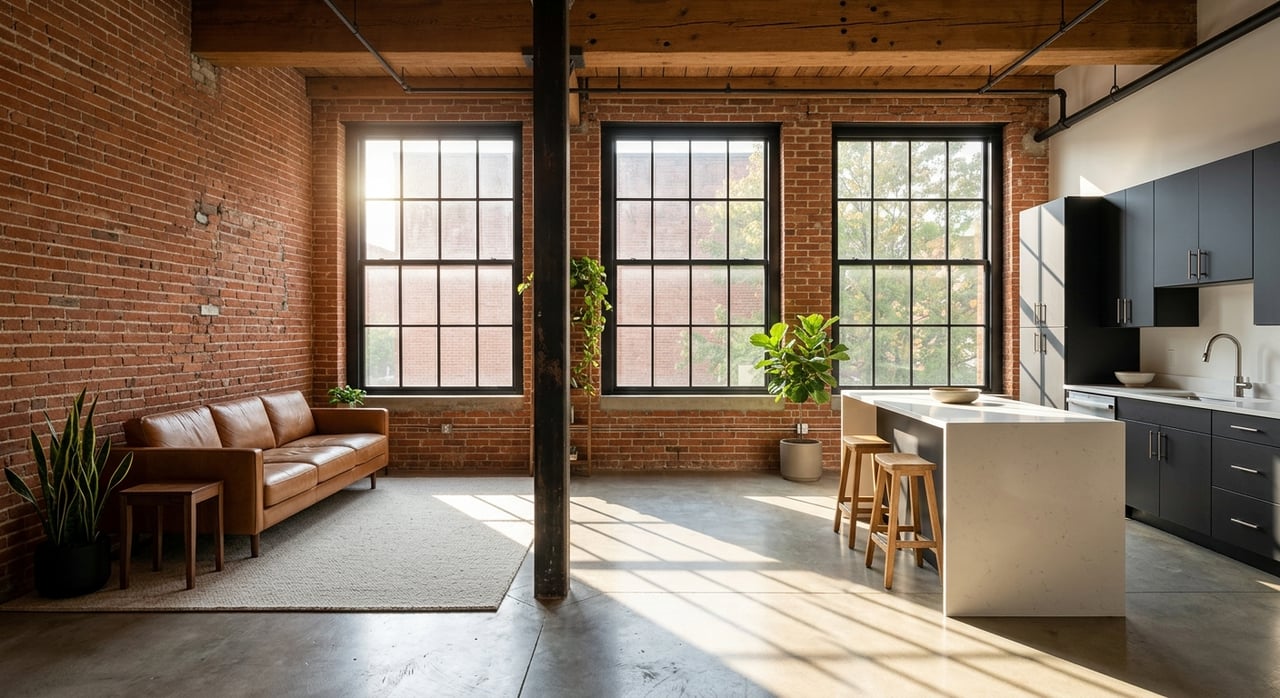
If your priority is space that feels airy and less compartmentalized, a loft may be the right fit. A loft is generally a large open space that was once used for industrial or storage purposes and later adapted for residential use. In and near Logan Square, that often translates to high ceilings, large industrial-style windows, fewer interior walls, and flexible living areas.
Lofts can feel very different from vintage flats or detached homes. Instead of defined rooms and traditional separation, you often get a more open flow. That can be a major plus if you work from home, like entertaining, or simply want your space to feel larger and brighter.
Because many lofts come from adaptive-reuse buildings, buyers should look closely at building performance and shared ownership details. Window condition and efficiency matter, especially with large industrial-style openings. HVAC, sound transfer, and the financial health of the condo or building association are also important factors.
This is one of those home styles where the building can matter just as much as the unit itself. A dramatic ceiling height may grab your attention first, but your comfort and monthly costs will also depend on systems, reserves, and how the building is maintained.
Loft pricing in Logan Square can cover a wide range. Recent attached-home sales show values from the mid-$300,000s for a smaller two-bedroom unit to higher price points in the $500,000 to $700,000 range, with price often driven by square footage, ceiling height, original character, and amenities. In lofts, bedroom count alone does not always tell the full story.
New construction in Logan Square usually looks different from suburban new construction. Much of it comes in the form of infill projects and mid-rise development designed to fit an older urban block pattern. That means you may see new homes that feel modern inside while still sitting within a neighborhood defined by older brick and stone architecture.
Buyers often choose new builds for one simple reason: fewer immediate projects. Updated plumbing, electrical, appliances, and HVAC can reduce near-term repair pressure. Many newly built homes also come with builder warranties, commonly covering workmanship and materials for one year, systems for two years, and major structural defects for up to ten years.
Even when a home is brand new, it is not maintenance-free. You still need to budget for ongoing upkeep, repairs, property taxes, HOA dues if applicable, landscaping, and possible punch-list items after move-in. That bigger cost picture matters in Logan Square because entry prices are already elevated compared with many other Chicago neighborhoods.
For some buyers, the convenience is worth it. For others, paying a premium for turn-key condition may leave less room in the budget for size or location. The right answer depends on whether you value modern systems more than vintage detail or expansion potential.
New construction usually sits toward the upper end of the Logan Square market. Buyers are often paying for clean systems, contemporary layouts, and fewer immediate repairs. If you want the simplest move-in experience, this category often delivers that, but usually at a higher upfront cost.
The best home style usually comes down to what tradeoff feels easiest for you to live with. Every option offers something valuable, but each one also asks for a different kind of flexibility from the buyer. A clear priority list can make your decision much easier.
Here is a simple way to think about it:
In a market as active as Logan Square, understanding these differences can help you move faster and more confidently when the right home appears. The more clearly you define your priorities before you tour, the easier it becomes to spot real value.
If you are weighing home styles in Logan Square and want a data-driven read on how condition, layout, and location affect value, Leigh Marcus can help you compare your options with clarity and confidence.

2203 W Roscoe St Chicago, IL 60618 30 Green Bay Road Winnetka, IL 60093